Shiga Prefecture
Inland prefecture encircling Japan's largest lake, Lake Biwa.

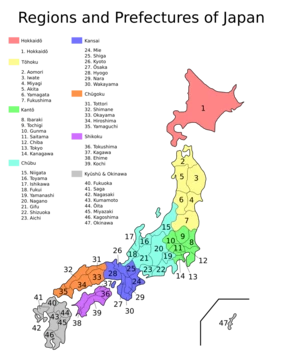
Shiga Prefecture is an inland prefecture of Japan in the Kansai region of Honshu. It encircles Lake Biwa, the largest freshwater lake in Japan, and has the highest proportion of land designated as Natural Parks of any prefecture. Historically known as Ōmi Province, it was a neighbor of Nara and Kyoto and a junction of western and eastern Japan.
- Capital
- Ōtsu
- Population
- 1,398,972 (as of 1 February 2025)
- Area
- 4,017 km² (1,551 sq mi)
- Region
- Kansai, Honshu
- Largest Lake
- Lake Biwa
- Highest Mountain
- Mount Ibuki
- Notable Castle
- Hikone Castle (national treasure)
Verified Timeline
Lore & Background
Shiga was known as Ōmi Province before the prefectural system. During the period 667 to 672, Emperor Tenji founded a palace in Otsu, and in 742, Emperor Shōmu founded a palace in Shigaraki. In the early Heian period, Saichō was born in the north of Otsu and founded Enryaku-ji, a UNESCO World Heritage Site. During the Azuchi-Momoyama period, Oda Nobunaga built Azuchi Castle on the eastern shores of Lake Biwa in 1579. After the Battle of Sekigahara in 1600, Tokugawa Ieyasu made Ii Naomasa lord of Sawayama, establishing the Hikone Domain. Ii Naosuke later became Tairō of the Tokugawa shogunate and concluded commercial treaties ending Japan's isolation. With the abolition of the han system, eight prefectures were formed in Ōmi and unified into Shiga Prefecture in September 1872. From August 1876 to February 1881, southern Fukui Prefecture was incorporated into Shiga.
Reader's Guide
Shiga Prefecture's significance lies in its historical role as a crossroads between western and eastern Japan, its preservation of Lake Biwa—the nation's largest freshwater lake—and its high proportion of natural parkland. The prefecture contains Hikone Castle, one of only four national treasure castles in Japan, and Enryaku-ji, a UNESCO World Heritage Site. Its economy is notable for having the highest proportion of manufacturing output in Japan as of 2014. Culturally, Shiga is home to Ōmi beef, the Eight Views of Ōmi, and the Tonda Traditional Bunraku Puppet Troupe. The prefecture's climate varies sharply between the warmer south and the snowy north, with Mount Ibuki as its highest peak. In 2015, Governor Taizō Mikazuki surveyed citizens on renaming the prefecture to boost tourism. The prefecture's population is concentrated along the southern and eastern shores of Lake Biwa, within commuting distance to Kyoto, and includes a significant Brazilian community.
Did You Know?
- 37% of Shiga's total land area is designated as Natural Parks, the highest of any prefecture.
- In Nakanokawachi, the northernmost village of Shiga, snow reached a depth of 5.6 metres (18 ft) in 1936.
- As of 2014, the manufacturing sector accounted for 35.4% of Shiga's economic production, the highest proportion in Japan.
- The Seta River is the only natural river that flows out from Lake Biwa.
- In 2015, Governor Taizō Mikazuki conducted a survey asking citizens whether they felt it necessary to change the name of the prefecture.
Frequently Asked Questions
Who is Shiga Prefecture?
Shiga is an inland prefecture in Japan's Kansai region on Honshu, best known for completely surrounding Lake Biwa, the country's largest freshwater body. Its administrative seat is the city of Ōtsu, and it sits at the crossroads between western and eastern Japan.
What is Shiga Prefecture's signature trait or defining 'power'?
Shiga holds the record for the highest percentage of its territory set aside as Natural Parks among all Japanese prefectures. It also encircles Lake Biwa entirely, making the lake a central part of its identity rather than just a border feature.
Where exactly is Shiga Prefecture located?
It sits inland in the Kansai region of Honshu, bordered by Nara to the south and Kyoto to the west. Its highest point is Mount Ibuki, and its total area spans roughly 4,017 square kilometers.
How big is Shiga Prefecture in terms of population?
As of early 2025, Shiga is home to approximately 1.4 million residents. Its capital city is Ōtsu, which sits along the eastern shore of Lake Biwa.
Why does Shiga Prefecture matter in Japan's history?
Known in the old provincial system as Ōmi Province, Shiga served as a critical junction linking the eastern and western halves of the country. Its position as a neighbor to both Nara and Kyoto made it a strategic corridor for trade and travel throughout Japanese history.
More in Japanese Prefectures 1-24
Elsewhere in the Japanese Prefectures universe
Spotted an error? Know more?
This is a living reference — every entry is fact-audited, and reader corrections feed straight into our audit queue. Suggest an edit · See this site's audit record