Fukui Prefecture
A Japanese prefecture on the Sea of Japan coast.

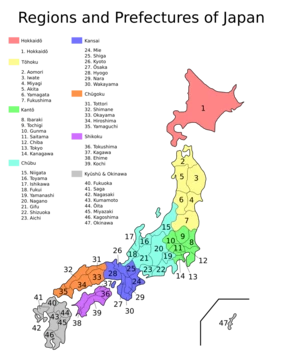
Fukui Prefecture is a prefecture of Japan located in the Chūbu region of Honshū, on the Sea of Japan coast. It is part of the historic Hokuriku region and was formed in 1871 from the old provinces of Wakasa and Echizen. The prefecture is known for its dinosaur fossil excavations, traditional papermaking, and as the site of several nuclear power plants.
- Capital
- Fukui
- Population
- 737,229 (1 January 2025)
- Area
- 4,190 km² (1,617 sq mi)
- Region
- Chūbu (Hokuriku)
- Major Cities
- Fukui, Sakai, Echizen, Sabae
- Known For
- Dinosaur fossils, Echizen paper, glasses production, nuclear power
Verified Timeline
Lore & Background
Fukui Prefecture originally consisted of the old provinces of Wakasa and Echizen before being formed in 1871. During the Edo period, the daimyō of the region was surnamed Matsudaira, a descendant of Tokugawa Ieyasu, and was headquartered at Fukui Castle. During World War II, Fukui was heavily bombed and its castle was demolished; the prefectural government buildings now occupy the castle site. The prefecture is home to the Kitadani Dinosaur Quarry, which has yielded dinosaurs such as Fukuiraptor, Fukuisaurus, and Fukuititan. Culturally, it hosts the Ichijōdani Asakura Family Historic Ruins, Eihei-ji temple founded by Dogen Zenji in 1244, and Maruoka Castle, the oldest standing castle in Japan, built in 1576. Sabae produces 90% of Japan's domestically made glasses, and Fukui has 14 reactors, the most of any prefecture. Fukui faces an aging and decreasing population; in July 2015, 28.6% of the population was over 65, and the population decreased by 2.6% from the 2010 census. In August 2010, the prefecture launched a dating website called Fukui Marriage-Hunting Café to address population decline.
Reader's Guide
Fukui Prefecture holds significance as a region blending natural resources, industrial output, and cultural heritage. Its dinosaur fossil sites, particularly the Kitadani Formation, have contributed to paleontology with several named species. The prefecture's traditional Echizen papermaking is world-renowned, and its glasses industry in Sabae dominates the domestic market. The presence of 14 reactors along Wakasa Bay makes Fukui a key energy supplier to the Keihanshin metropolitan region. Culturally, sites like Eihei-ji, Maruoka Castle, and the Ichijōdani Asakura Family Historic Ruins attract visitors and preserve Japan's feudal and Buddhist heritage. The prefecture's proactive measures to counter population decline, such as the government-sponsored dating website, highlight contemporary demographic challenges. Fukui's location in Japan's 'snow country' and its scenic coastline, including the Tōjinbō cliffs, add to its geographic distinctiveness. Overall, Fukui represents a microcosm of Japan's historical depth, industrial specialization, and modern social issues.
Did You Know?
- Sabae produces 90% of Japan's domestically made glasses.
- Fukui has 14 nuclear reactors, the most of any prefecture in Japan.
- Maruoka Castle, built in 1576, is the oldest standing castle in Japan.
- The Kitadani Dinosaur Quarry has yielded dinosaurs including Fukuiraptor, Fukuisaurus, and Fukuititan.
- In August 2010, Fukui launched a government-sponsored dating website called Fukui Marriage-Hunting Café.
Prehistoric Fossil Treasures
Fukui Prefecture holds a remarkable prehistoric legacy centered on the Kitadani Formation, a geological layer that has produced an extraordinary array of dinosaur remains. The Kitadani Dinosaur Quarry, situated along the Sugiyama River within the city of Katsuyama, has yielded species including Fukuiraptor, Fukuisaurus, Nipponosaurus, Koshisaurus, Fukuivenator, Fukuititan, and Tambatitanis, alongside an as-yet-unnamed dromaeosaurid. These discoveries collectively form what is known as the Kitadani Family, a grouping that has placed Fukui on the global paleontological map. The fossils are not merely academic curiosities; they are displayed for public viewing at the Fukui Prefectural Dinosaur Museum, also located in Katsuyama, where visitors can walk among the skeletal remains of creatures that roamed this region millions of years ago.
Samurai Heritage and Enduring Cultural Landmarks
The Edo period left a mark on Fukui through the Matsudaira clan, a powerful samurai house descended from Tokugawa Ieyasu that governed the region as daimyō from their seat at Fukui Castle. That castle, once encircled by a moat, was destroyed during World War II bombing, and the modern prefectural government buildings now occupy the very ground where the fortress once stood. Beyond the martial past, Fukui's cultural landscape is anchored by several sites of national importance. The Ichijōdani Asakura Family Historic Ruins stand among Japan's most significant heritage locations. Eihei-ji, a Zen temple established by Dogen Zenji in 1244, spreads across roughly 33 hectares and continues to serve as a training ground for Buddhist monks. Maruoka Castle, constructed in 1576, holds the distinction of being the oldest still-standing castle in Japan. Myōtsū-ji's Three-storied Pagoda and Main Hall are designated National Treasures. Together, these sites weave a thread of continuity stretching from the medieval period to the present day.
Industrial Power and Coastal Economy
Fukui's economic identity is defined by two striking pillars: precision manufacturing and nuclear energy. The city of Sabae produces approximately ninety percent of all domestically made eyeglasses in Japan, a concentration of optical craftsmanship that has made the prefecture synonymous with lens and frame production. On the energy front, the Tsuruga area along Wakasa Bay hosts fourteen reactors—the highest count of any prefecture in the country—whose output feeds power to the Keihanshin metropolitan region. Tsuruga Port further extends the prefecture's economic reach, operating ferry routes to Niigata, Akita, Tomakomai, and Otaru while also functioning as an international container hub. Beyond these heavy industries, Fukui's clean water and fertile agricultural land support a tradition of sake brewing, rice cultivation, and soba noodle production that has long been a source of local pride. The prefecture's position on the Sea of Japan coast, within the historic Hokuriku corridor, underpins both its maritime trade connections and its role as a supplier to one of Japan's largest urban clusters.
Aging, Declining, and Reimagining Community
Like much of rural Japan, Fukui confronts a demographic squeeze. The population, measured at roughly 737,229 as of 1 January 2025, has been on a gradual downward trajectory, having slipped about 2.6 percent from the 806,000 recorded in the 2010 national census. In July 2015, 28.6% of residents were over sixty-five, underscoring the depth of the aging challenge. In a creative response to these pressures, the prefecture launched the Fukui Marriage-Hunting Café in August 2010, an online dating platform designed to encourage local pairings. Couples who meet through the service and go on to marry receive monetary assistance and gifts from the government, blending digital matchmaking with a tangible civic incentive. The prefecture also maintains international friendship ties with Vihti in Finland and Winsen (Luhe) in Germany, while residents speak a distinctive local dialect known as Fukui-ben. Nestled in Japan's snow country, with a narrow western plain between mountains and sea and broader eastern plains, Fukui's geography shapes both its climate and its sense of insular identity.
Frequently Asked Questions
Who is Fukui Prefecture?
A Sea of Japan coastal prefecture in Honshū's Chūbu region, governed from the city of Fukui and home to roughly 737,000 residents as of early 2025.
What are Fukui Prefecture's signature powers?
It is best known for prolific dinosaur fossil sites, centuries-old Echizen papermaking, and a large-scale eyewear manufacturing industry. It also operates several nuclear power plants along its coastline.
What's Fukui Prefecture's origin story?
It was formally created in 1871 when the old Wakasa and Echizen provinces were merged into a single administrative prefecture.
Why is Fukui Prefecture important to the broader region?
As a core part of the historic Hokuriku corridor, it links central and northern Honshū along the Sea of Japan coast, and its nuclear facilities contribute notably to Japan's electricity supply.
Where does Fukui Prefecture sit on the map?
It covers roughly 4,190 square kilometres of coastal and mountainous terrain, with its major urban centres being Fukui, Sakai, Echizen, and Sabae.
More in Japanese Prefectures 1-24
Elsewhere in the Japanese Prefectures universe
Spotted an error? Know more?
This is a living reference — every entry is fact-audited, and reader corrections feed straight into our audit queue. Suggest an edit · See this site's audit record